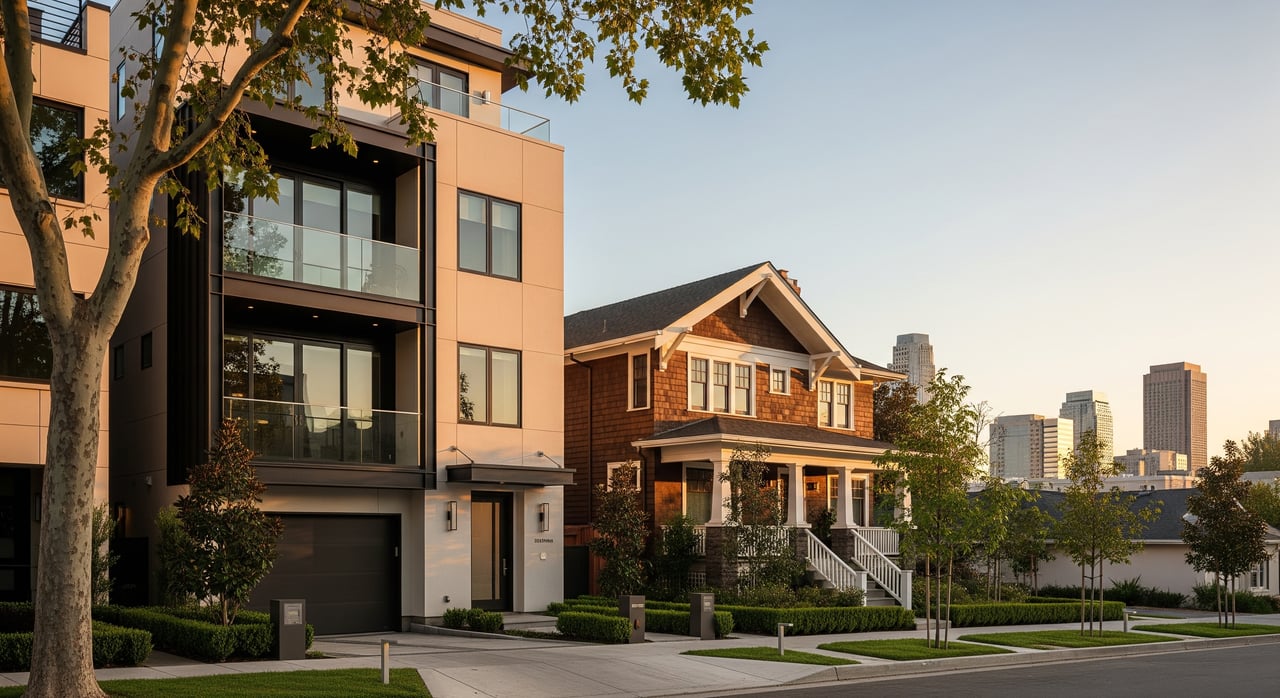
Trying to choose between a townhome and a single-family house in Downtown San Jose? You are not alone. With new development, strong transit access, and a mix of historic homes and modern communities, the choice comes down to lifestyle, budget, and how much control you want over your space. In this guide, you will learn the real differences in ownership, costs, financing, maintenance, and resale so you can move forward with confidence. Let’s dive in.
Downtown San Jose at a glance
Downtown San Jose is the city’s business and entertainment core, with restaurants, venues, and walkable blocks that draw tech workers, students, and public-sector employees. Housing includes older single-family homes at the edges and newer condo and townhome communities closer to the center.
Transit is a major advantage. VTA light rail and bus lines run through the area, and Diridon Station connects to Caltrain with planned BART expansion and other improvements. Large redevelopment efforts near Diridon and Downtown continue to shape demand, future supply, and parking conditions.
Townhome vs house: key differences
Ownership and control
- Single-family house: You usually own the land and the structure as fee simple. You have more control over exterior changes, landscaping, and expansions, subject to permits and local codes.
- Townhome: Ownership can be fee-simple attached or a condominium interest within a planned development. Either way, an HOA and CC&Rs typically govern exterior appearance, common areas, and shared systems. Review the legal description on title and the HOA rules before you buy.
Cost and ongoing fees
- Purchase price: Townhomes in San Jose often list for lower total prices than comparable single-family homes. In prime downtown locations, the gap can narrow depending on finishes and size.
- Monthly costs: Single-family owners avoid HOA dues but budget for exterior upkeep, yard care, and higher utilities. Townhome owners pay HOA fees that cover common area maintenance, partial insurance, landscaping, and sometimes utilities or amenities. Fee levels vary widely by community.
Financing realities
- Single-family homes: Conventional, FHA, and VA financing is common and typically straightforward.
- Townhomes and condos: Lenders review the association’s financial health, owner-occupancy level, dues delinquency, and any litigation. FHA and VA have approval processes for condo projects. Fee-simple attached townhomes that are not part of a condo association can be easier to finance than condo units in a large project. Work with lenders experienced in Bay Area townhome and condo lending.
Maintenance and reserves
- Single-family: You handle roof, exterior paint, fencing, driveway, and landscaping. You control timing and vendors, but costs can be lumpy.
- Townhome: The HOA typically manages building exteriors and common systems. A strong reserve fund and good management can reduce surprises. Thin reserves can lead to special assessments. Always request the HOA budget, reserve study, insurance summary, and recent meeting minutes.
Insurance and hazard readiness
- Policy types: Single-family homes usually use HO-3 policies that cover the structure and contents. Condo-style townhomes often use HO-6 policies for interior improvements and personal property because the HOA master policy covers the building shell and common elements. Confirm the master policy’s deductibles and earthquake provisions.
- Local hazards: Earthquake risk applies citywide. Consider earthquake insurance and, for older structures, review foundation and seismic upgrades. Urban fire risk is generally lower than in wildland areas, but attached living means building fire safety and egress are important. Ask about sprinklers, alarms, and recent safety upgrades.
Taxes and assessments
- Property taxes: California’s Proposition 13 sets the base rate near 1 percent of assessed value, plus local assessments that vary by parcel. Some newer developments include Mello-Roos or special assessments. Verify details with the county assessor for any property you are considering.
Parking, storage, and yard space
- Single-family: Typically offers a private driveway, garage, and a yard. This helps if you want a garden, have pets, or need storage.
- Townhome: Many include attached garages and small patios or balconies. Guest parking and street parking can be limited by HOA rules and city regulations. Downtown meters, event-day impacts, and residential permit zones may affect where you and your visitors can park.
Privacy, noise, and lifestyle
- Townhome: Shared walls can increase sound transfer. Proximity to neighbors and common areas may reduce privacy.
- Single-family: More separation and private outdoor space. Both property types in Downtown experience urban noise from streets, nightlife, and events, especially near major venues or transit lines. Visit at different times of day to gauge your comfort.
Resale and demand
- Townhomes: Appeal to professionals, downsizers, and investors who value low maintenance and transit access. Rental demand near jobs and transit tends to support liquidity.
- Single-family homes: Attract buyers seeking more space and land ownership. In Downtown, detached options can be limited and may command a premium. Over the long term, limited land supply can support single-family values, while location and quality also drive townhome performance.
What fits your lifestyle?
When a townhome fits best
- You want low-maintenance living with exterior care handled by an HOA.
- You value walkable access to restaurants, events, and transit.
- You prefer a lower purchase price than a comparable single-family home in the same area.
- You are comfortable with HOA rules and monthly dues.
When a house fits best
- You want a private yard for pets, gardening, or outdoor gatherings.
- You prefer full control over exterior improvements and timing of maintenance.
- You need extra storage, parking, or potential for future expansion.
- You are prepared for hands-on upkeep and budgeting for larger repairs.
Downtown-specific rules to know
Zoning, density, and ADUs
Downtown zoning supports higher densities and mixed-use development. This can increase future supply in certain pockets and affect neighborhood character. If you plan to expand or add an accessory dwelling unit, confirm rules with the City of San Jose Planning and Building divisions. State ADU laws are more flexible than in the past, but local permits and utility connections still apply.
HOAs and California regulations
California’s Davis-Stirling Act governs common interest developments. Buyers must receive disclosures, including CC&Rs, bylaws, budgets, reserve studies, insurance details, and recent meeting minutes. Read these closely to understand restrictions, financial health, and upcoming projects.
Short-term rentals
San Jose regulates short-term rentals. Registration, tax collection, and limits can apply, and many HOAs restrict or prohibit short-term stays in their CC&Rs. If you plan to host, verify city rules and your HOA’s rental policies.
Parking and street rules
Downtown streets use meters and have event-day parking impacts. Some blocks include residential permit programs. Condo and townhome communities may limit guest parking or set garage usage rules. Review HOA policies and city guidance before you commit.
Due diligence checklist
For any property
- Review the seller’s disclosures for past damage, foundation issues, or unpermitted work.
- Hire a professional inspector for the roof, structure, HVAC, plumbing, electrical, and drainage.
- Confirm the parcel type and legal description, and check title for easements or encroachments.
- Visit at multiple times of day, including event nights, to evaluate noise and traffic.
- Verify property taxes and any special assessments with the county assessor.
For townhomes and HOAs
- Request CC&Rs, bylaws, rules, budget, reserve study, insurance certificate, and 12 to 24 months of meeting minutes.
- Ask about delinquencies, pending litigation, and recent or planned special assessments.
- Confirm what dues cover, including exterior maintenance, roof, landscaping, water, trash, and amenities.
- Check rental caps, minimum lease terms, and owner-occupancy rates.
- Verify how utilities are metered and typical monthly costs.
For single-family homes
- Check setback rules and the feasibility of future expansions or an ADU with the city.
- Confirm any shared driveways or easements and related maintenance agreements.
- Evaluate seismic readiness, drainage, and major systems replacement timelines.
Financing and insurance
- Get pre-approved with a lender familiar with Bay Area condo and townhome requirements.
- For condo projects, verify FHA or VA approval if needed.
- Obtain quotes for homeowner and earthquake insurance, and compare policies against any HOA master policy.
For sellers preparing to list
- Townhomes: Organize HOA documents early. Be ready to explain reserves, recent assessments, and any building projects.
- Single-family homes: Highlight recent maintenance, seismic upgrades, and energy or water-saving improvements.
Buying or selling with confidence
Choosing between a townhome and a house in Downtown San Jose comes down to how you want to live, what you want to control, and how you want to budget. If you love walkability and simplified upkeep, a townhome can be a strong match. If you want private outdoor space and maximum flexibility over your property, a single-family home may be worth the premium.
When you are ready, partner with a local expert who can simplify the process. From thoughtful pricing and instant valuations to staging, repairs, HOA review, and escrow coordination, you get a clear plan from offer to close. Hablo español.
Have questions about your next move in Downtown San Jose or nearby South Bay neighborhoods? Let’s talk. Connect with Elsa Garza for local guidance tailored to your goals.
FAQs
What is the main cost difference in Downtown San Jose?
- Townhomes often list at lower total prices but include monthly HOA dues. Single-family homes avoid HOA fees but usually have higher maintenance and utility costs.
Are townhomes harder to finance than houses?
- Lenders scrutinize condo and townhome associations for reserves, litigation, and occupancy. Fee-simple attached townhomes can be easier than condo units, and single-family homes are typically the simplest to finance.
Do townhomes appreciate less than single-family homes?
- Long-term trends often favor single-family homes because of land scarcity, but location, building quality, and transit access can support strong townhome appreciation in Downtown.
What hidden townhome costs should I watch for?
- Potential special assessments, rising dues, master insurance deductibles, litigation, and rental restrictions. Review HOA budgets, reserve studies, and meeting minutes.
Can I do short-term rentals in a Downtown townhome?
- Possibly, but you must follow San Jose rules and your HOA’s CC&Rs. Many associations limit or prohibit short-term rentals, and city registration and taxes may apply.
How does parking differ between townhomes and houses?
- Single-family homes typically offer driveways and private garages. Townhomes may have attached garages but tighter guest parking and street rules, especially near event venues and meter zones.